A do it yourself car wash can save you money and give you more control over how your vehicle is cleaned. But you need some idea of what you’re doing to avoid damaging your paintwork or wasting water. So, whether you clean your car at home or use a self-service station, understanding DIY car wash best practices can help you achieve better results.
If you’re interested in a gentle steam hand car wash, download Eco Wash Benefit Guide:

What is a Do It Yourself Car Wash?
A do it yourself car wash is where you clean your own vehicle without help from professional auto detailers or automatic car washes. There are different DIY car care options. For example:
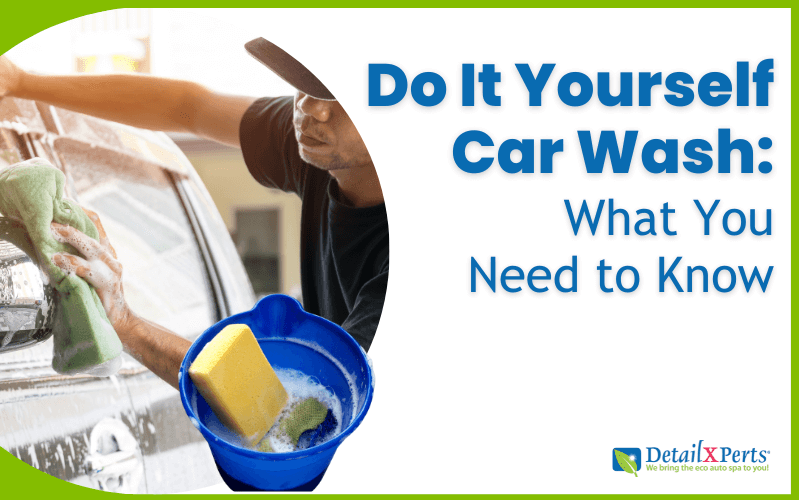
- Two-bucket method: The traditional way to get the job done. You use one bucket of soapy water and a sponge to get rid of the dirt. Then, a second bucket with clean water to rinse. This way, you have more control over water usage.
- Pressure washer: Quicker than using buckets. You apply car cleaning products, then rinse with a high-pressure hose. It’s an effective way to clean your car at home but there’s a lot of runoff.
- Self service car wash: You can customize your wash with add-ons, such as tire shine. Use the provided equipment and pay with coins or tokens to clean your car according to your preferences.
Note, when you’re washing your car at home, it’s important to follow local water usage guidelines and environmental regulations to ensure responsible water usage and disposal of cleaning chemicals.
How Often Should You Wash Your Car
How often you hand-wash your vehicle is entirely up to you. If you love driving a spotlessly clean vehicle, then once a week should do the trick. Of course, it also depends on where you live. For example, urban areas with pollution can mean more grime buildup on your car exterior. Again, we recommend weekly car care. However, washing your car every two weeks should be enough in normal circumstances. If you don’t have time, a professional hand car wash is a good idea.
DIY Car Wash Supplies List
Make sure you have all the right items from the recommended car wash supplies list before starting the job. Using proper car care products can help achieve a more professional clean. Essential items for the exterior include:
- Car wash soap.
- Two buckets.
- Microfiber car cloths.
- Wheel cleaner.
- Car wash brushes.
- Car wax.
If you want to go beyond the basic wash and clean the inside of your car, then check out a car interior detailing kit. These items can help you tackle upholstery, carpets, and interior surfaces.
How to DIY Wash Your Car
The steps and techniques depend on the method. Here are the three most popular ways to wash your car yourself.
Self-Service
If you don’t want to clean your vehicle on your driveway, visit a self-service car wash. Here’s how it is done:
- Make a payment to activate the wash.
- Choose your preferred wash cycle from the options.
- Apply a pre-soak foam to loosen the dirt.
- Switch the setting to apply soap all over your vehicle.
- Use the provided brush to scrub your car clean.
- Rinse and dry.
- For more tips, see how to hand wash a car.

Two Bucket Method
This method helps you minimize scratches when you’re washing your car. Rinsing your cloth or sponge in the rinse bucket helps remove dirt and grit particles before you dip it back into the separate bucket of soapy water. Here’s what to do:
- Fill one bucket with soapy water and another with clean water for rinsing.
- Wash your car with the soap mixture using a sponge or microfiber car cloth. Start from the top and work your way down.
- To avoid scratching your car’s surface, rinse the sponge or mitt in clean water before reapplying soapy water.
- Rinse the car with clean water.
- Finally, dry with a clean microfiber car cloth to avoid water spots.
Pressure Wash
Pressure washing your car is a quick way to remove dirt and grime. A 25-degree nozzle will give you a wide spray suitable for DIY washing your car. However, this method uses a lot of water compared to the two-bucket method. Here are the steps:
- Set the pressure washer to a low setting and rinse car to remove dust and dirt.
- Wash the vehicle with car wash soap and water, starting from the top and working your way down.
- Use the pressure washer to rinse off all the soap.
- Dry with microfiber towels to prevent water spots.
If you prefer a high-pressure jet wash without putting the work in yourself, look around for brushless car wash options like an automatic laser car wash.
Pros and Cons of DIY Car Wash
DIY car washes are generally cheaper than other car wash services, which is ideal if want a cost-effective way to clean your car. However, the do-it-yourself method has disadvantages, too. Check out the pros and cons:
Pros
- Attention to detail: Spend as much time as you like cleaning and polishing your car to perfection.
- Boost your car care skills: Learn to use the right techniques and products to achieve professional-level auto detailing.
- Budget-friendly: Visit a self-serve car wash for around $10 or less.
- Enjoyable: Washing your own car can give you a sense of accomplishment and pride when you see the finished results.
- Physical activity: Gets you moving! Cleaning your car manually is a light workout, which you miss out on when sitting in your vehicle at a soft cloth car wash.
Cons
- Water consumption: Some DIY methods can get through gallons of water if you’re not careful. Use a low-flow nozzle with an automatic shutoff feature to reduce water wastage. Alternatively, try a waterless car wash.
- Contaminants: Pressure washing your car in the driveway can result in soap, oil, and other contaminants running off into storm drains and local waterways.
- Time-consuming: Washing a car yourself takes a lot more time and effort than an express drive through car wash or a 24 hour car wash. DIY cleaning all parts of the car, including the tires, undercarriage, and interior, is not a two-minute job. It can also be physically tiring.
- Supplies and equipment: If you want a professional-level clean, you need to invest in tools and products, and the cost can add up. See below. You’ll also need access to a water supply, which might be tricky if you don’t have a driveway.
- Lack of experience: If you’re new to this, you might not achieve the best results. Moreover, improper use of equipment or incorrect techniques could cause scratches or swirl marks on your exterior.
How Much Does a Do It Yourself Car Wash Cost?
A basic DIY car wash can cost as little as $20-$50 in supplies if you already have buckets and cloths. However, if you’re starting from scratch and plan to buy high-quality items from a hand car wash equipment list, including brushes, wheel cleaners and a pressure washer, expect to spend a lot more. For example:
- Car wash soap: $10-$20.
- Microfiber cloths: $5-$20.
- Buckets: $5-$15 each.
- Wheel cleaner: $10-$20.
- Car wash brushes: $10-$30.
- Pressure washer: $100-$200+.
- Car interior detailing kit: $20-$200+.
If you prefer using a self-service car wash, expect to pay around $5 to $15 per visit, depending on the location and wash options you want.
DIY Car Wash FAQs
Can you wash your car after window tint?
Yes, provided you wait a few days until the adhesives have properly dried. Even though you install the tint on the glass interior, skipping the car wash is still wise until the tint’s drying process is complete. Another thing, you might also notice small bubbles on the windows. This is normal and will disappear as the tint cures.
Can you use dish soap to wash your car?
No, we don’t recommend it. Dish soap’s strong detergents are bad news for the protective wax and sealants on your car exterior. Also, the harsh chemicals can dry out paintwork, which is going to dull the shine over time. Furthermore, dish soap can be tricky to rinse off, which may leave streaks and water spots. Instead, go for pH-balanced car wash soaps made to clean and protect your vehicle.
Can you use Dawn to wash your car interior?
Yes, you can use Dawn dish soap diluted with water to shift stubborn stains on your carpets or upholstery. See our tips on how to remove stains from car seats. If your car interior needs a deep clean, a full service car wash is a good idea.
How often should you wash your car during pollen season?
In high-pollen areas, you may need to wash your car twice a week. Regular washing helps protect your paintwork and prevents stains caused by the sticky residue of pollen. Also, you might want to apply a wax treatment to give your exterior an extra layer of protection against abrasive pollen contaminants. Explore other car wash services if you don’t have time to do it yourself.
How often should you wash salt off your car to prevent rust?
If you live in a coastal area, ocean salt can cause rust and corrosion on your paintwork. Similarly, during the winter months in colder regions with snow and ice, road salt buildup can be a problem for your car. In these situations, we recommend weekly washes. Also, see our tips on washing car in winter.
Conclusion
To sum up, a do it yourself car wash allows you to wash your vehicle how and when you want. If you enjoy taking care of your car personally, this DIY pastime can be enjoyable and rewarding. Also, there’s more than one way to do it. You can use buckets or a pressure washer. Another option is to visit a self-service station. However, these aren’t the most eco-friendly methods if there is runoff pollution or high-water usage. So, use biodegradable cleaning products and don’t leave hoses or pressure washers running continuously.
Alternatively, seek out eco car wash options. DetailXPerts brings convenient mobile detailing to your doorstep. Our steam cleaning technology uses minimal water to ensure we preserve this precious resource. Chat with our trained technicians about interior and exterior packages when you want to shine and sanitize your car.